Find your bearings
A guide to the major lines
Locate the heart, head, life, and optional fate lines with an original, clearly labeled diagram.
See the line map →Palmistry · Observation before prediction
Palmistry gives names and stories to the folds, shapes, and proportions of the hand. A careful reading distinguishes visible features from traditional interpretation—and never treats a crease as a medical result or a measured lifespan.
Hands change with movement, work, age, and individual anatomy. FateQ describes palmistry as a historical interpretive practice, not a diagnostic science.
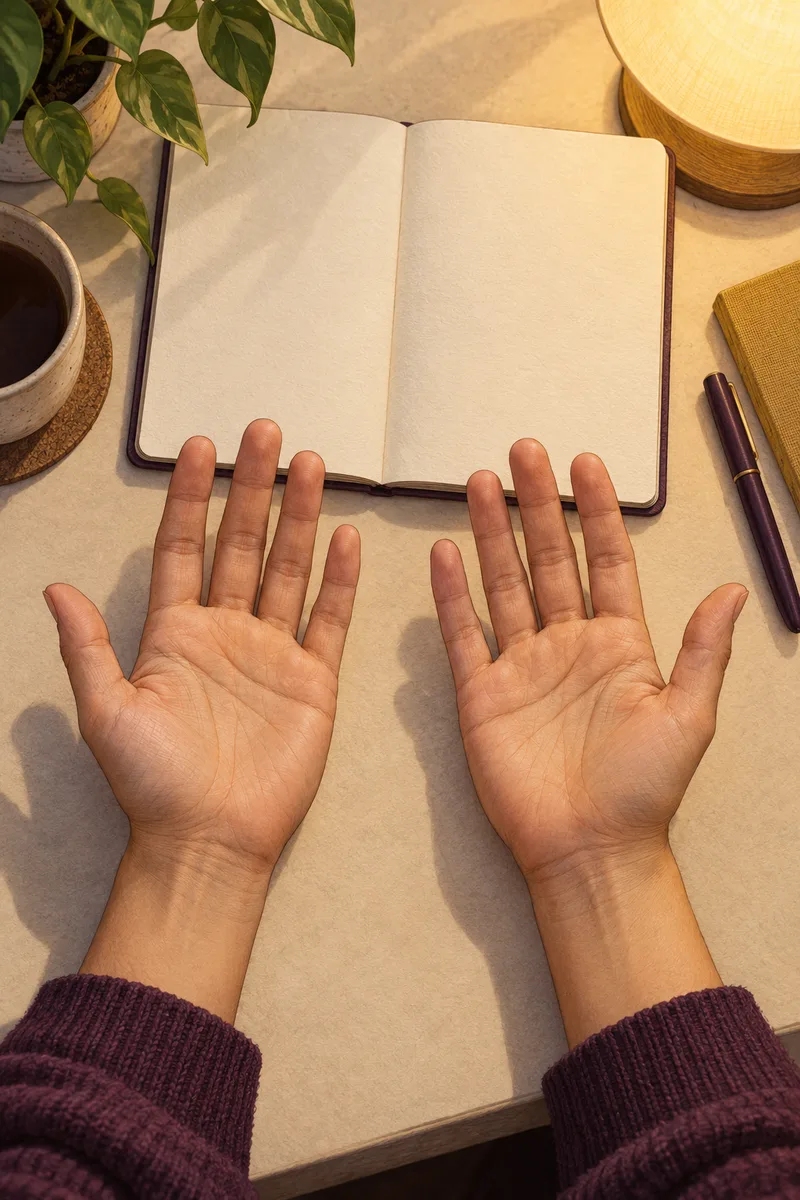
Find your bearings
Locate the heart, head, life, and optional fate lines with an original, clearly labeled diagram.
See the line map →Slow down the reading
Compare both hands, record what you see, and separate physical description from symbolic association.
Use the observation process →Match the conditions
Use consistent light, posture, distance, and viewing order before deciding that a visible difference belongs to the hand.
Follow the comparison method →Describe the detail
Record pronounced and faint segments, branches, crossings, forks, and uncertainty without converting variation into fate.
Study line appearance →Set useful boundaries
Learn what an ethical reading can offer and where claims about health, death, character, or certainty should stop.
Read the responsibility guide →Terms and traditions
Forms of hand reading have appeared in different regions and periods, and modern guides often blend conventions. Even familiar labels such as “heart,” “head,” and “life” describe traditional categories, not anatomical functions.
FateQ uses those widely recognized labels to make older material legible, then translates the interpretation into questions. A line can prompt reflection on emotional expression or decision-making; it cannot verify what someone feels, prove intelligence, or foretell how long they will live.
Choose a lens
Each path has its own history and vocabulary. FateQ presents these traditions and relationship prompts as frameworks for observation and self-inquiry—not as proof of personality or a fixed future.